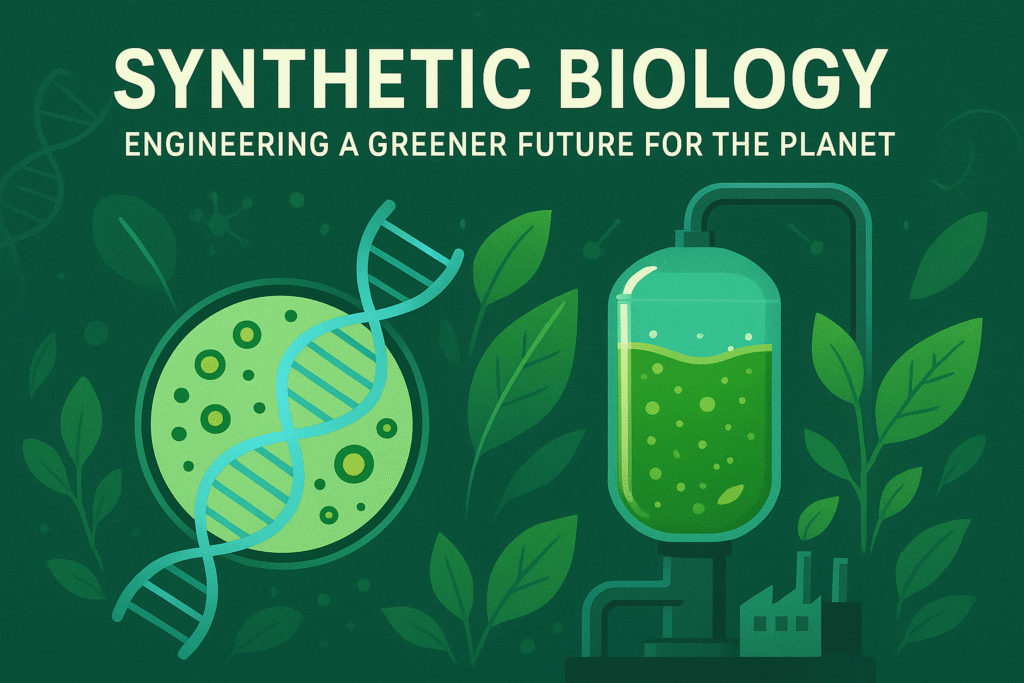

Discover how synthetic biology is revolutionizing sustainability — from creating biodegradable plastics to carbon-eating microbes — and why it’s key to solving our planet’s biggest challenges.
Introduction
Imagine a future where plastics dissolve harmlessly in weeks, fuels are brewed from algae instead of oil, and microbes clean polluted rivers on their own. This isn’t science fiction — it’s the promise of synthetic biology, the science of engineering life for specific purposes.
In the age of climate change, biodiversity loss, and plastic pollution, synthetic biology is emerging as one of the most powerful tools for building a sustainable future. By redesigning nature’s blueprints, scientists are developing eco-friendly materials, low-carbon fuels, and waste-eliminating enzymes.
Why Sustainability Needs Synthetic Biology
Traditional approaches to sustainability — recycling, tree planting, renewable energy — are vital, but they often work too slowly to match the speed of environmental damage. Synthetic biology offers a complementary, high-impact approach:
- Materials without petroleum – microbes can be programmed to produce biodegradable plastics and textiles.
- Fuels without fossil carbon – algae and engineered yeast can create clean-burning biofuels.
- Waste solutions at the molecular level – enzymes can be tailored to break down pollutants in record time.
Key Breakthroughs in Synthetic Biology for Sustainability
1. Biodegradable Plastics from Microbes
Engineered bacteria like Ralstonia eutropha can produce polyhydroxyalkanoates (PHA), a fully biodegradable alternative to petroleum plastics [Chen & Patel, 2012].
2. Algae-Based Biofuels
Species of algae are genetically modified to convert sunlight and CO₂ directly into oils, reducing greenhouse gas emissions and reliance on crude oil [U.S. DOE, 2023].
3. Plastic-Eating Enzymes
The PETase enzyme, improved through protein engineering, can break down polyethylene terephthalate (PET) in days rather than centuries [Nature, 2020].
4. Carbon-Capturing Microbes
Some synthetic microbes are designed to pull CO₂ from the air and convert it into building materials or even edible proteins [NREL, 2021].
Success Stories: Turning Ideas into Impact
- LanzaTech – Uses engineered bacteria to transform industrial waste gases into ethanol for fuel and chemicals.
- Bolt Threads – Produces Microsilk, a sustainable fabric inspired by spider silk, using engineered yeast.
- Impossible Foods – Creates plant-based burgers with heme proteins made by genetically engineered yeast, reducing the carbon footprint of meat.
Challenges and Ethical Concerns
Despite the promise, synthetic biology faces real challenges:
- Biosafety risks – accidental release of engineered organisms into natural ecosystems.
- Patent issues – questions about owning genetically engineered life forms.
- Public trust – transparency is crucial to avoid fear and misinformation.
The Road Ahead
The next decade will likely see synthetic biology integrating with AI and automation to design biological systems faster than ever. Developing countries could benefit from localized biofactories producing food, fuel, and medicine sustainably.
Governments, researchers, and communities will need to collaborate to ensure safety, accessibility, and equity as the technology advances.
- FAQs — Answering Your Questions
- Q1: How does synthetic biology help the environment?
- It creates renewable materials, fuels, and enzymes that reduce waste and greenhouse gases.
- Q2: Can synthetic biology replace fossil fuels?
- Yes. Algae and engineered microbes can produce biofuels that significantly cut emissions.
- Q3: What is an example of synthetic biology for sustainability?
- PHA bioplastics made by bacteria that degrade naturally without harming ecosystems.
Conclusion
Synthetic biology is more than just a laboratory curiosity — it’s a powerful engine for sustainable innovation. If guided responsibly, it could help humanity tackle some of the most urgent environmental crises of our time.
The green revolution might not be grown in a field — it could be engineered in a lab.
Stay tuned in for more in nichesystema.com !